Phantom Beirut
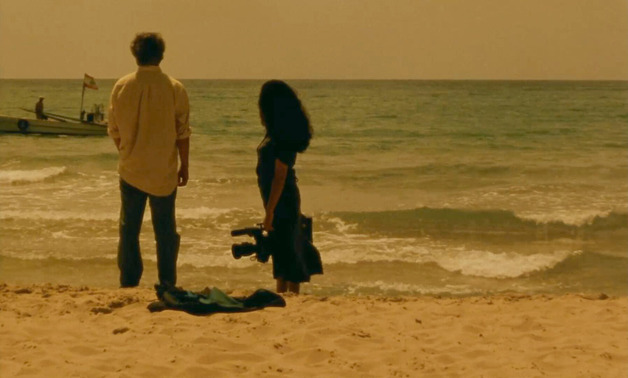
Ashbah Bayroot Libanon 1998 Regi og manus Ghassan Salhab Foto Jérôme Peyrebrune Musikk Toufic Farroukh Med Aouni Kawas, Darina El Joundi, Rabih Mroue, Carol Abboud 117 min DCP Arabisk tale, engelsk tekst Aldersgrense 12 år
"There are experiences that cannot be translated into fiction. One must then use the other, great narrative discourse – confession and testimony." — Antonio Munoz Molina
Phantom Beirut is set in Lebanon at the end of the 1980s, as Khalil returns home after ten years of absence. A decade earlier, in the civil war, Khalil used the cover of chaos and fire during a battle to fake his death and acquire a new identity. "His ex-comrades and lover are at a loss. Their grief, slowly domesticated and shelved through years of living after his disappearance, weighs heavy again because suddenly made gratuitous by his very reappearance. What Khalil returns to is a group of men and women who did weep the loss of a friend and then ceased to do so in order to survive. Angry and confused, they feel slighted by what seems like the artful trick of a prestidigitator." — Walid Sadek; from Collecting the Uncanny and the Labor of Missing
Deftly utilising documentary elements, its soundtrack interrupted by power outages and bombs, Ghassan Salhab’s debut feature film is a haunting exploration of the official silences and collective amnesias that stalk the lives of those who live through war.
"That disappearance cannot be surmounted by presence is the persistent problematic which runs through Beyrouth Fantôme.
Ghassan Salhab has addressed the thorny issue of the disappeared and the predicament of having to over-live with their absence. [His film]'s principle proposes the disappeared person as a spectral and haunting presence, a ghost who beleaguers the survivors’ attempts at rejoining their interrupted lives. [For Salhab], the spectral disappeared cannot be localized yet does preoccupy the space of the living and engross their attention. Even when decreed by law as dead, [the filmmaker] persists in evoking the haunting over-presence of the disappeared who cannot be located and therefore remain unobjectified." — Collecting the Uncanny and the Labor of Missing
"The film's central element is a sense of fading, a vision that transcends any preconceived narrative and its characters, ultimately permeating the film itself. Khalil's story is defined solely by his absence and his assertion that during his long disappearance, he accomplished nothing more than what others attempted: to learn how to die. [The others in this film] are not like ghosts, but ghosts in their own right; what we see is not the reality of the image, but rather its illusion. Herein lies the power of Ghassan Salhab's work: what we witnessed was cinema and its ghost simultaneously." — Mohammed Soueid; An-Nahar: October 17, 1988
"In Lebanon, it is impossible to separate the personal(/intimate) from the political.
The [2K] re-release of this restored masterpiece reminds us that Ghassan Salhab is the great poet of disappearance. His “ghosts” are not specters from horror films; they are beings of flesh and blood who no longer have a place in the real world."
— Frédéric Strauss; Télérama: December 11, 2024